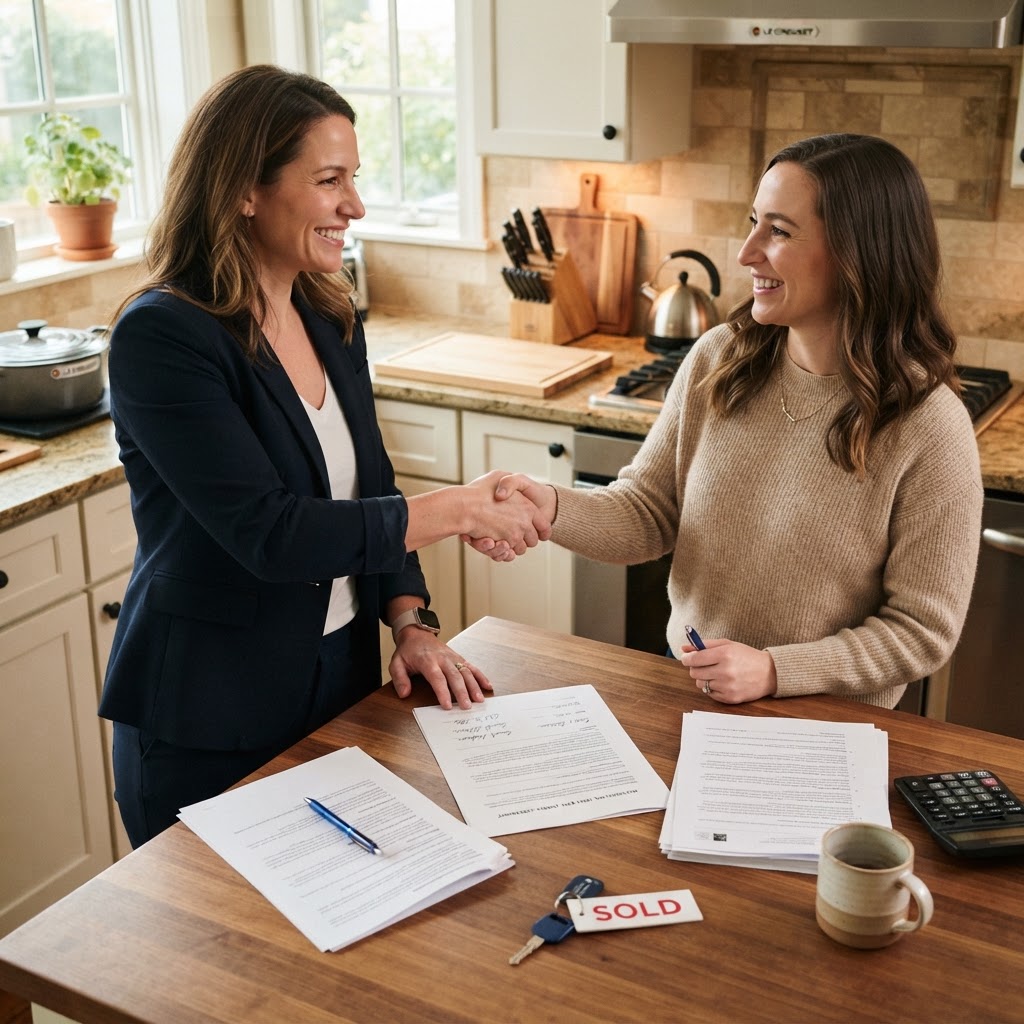
Negotiating Offers & Counteroffers
Master the art of negotiation to maximize your final sale price and terms.
Understanding an Offer
An offer is a formal contract proposal. Here's what matters:
Key Offer Terms:
- Purchase Price: The offered amount (often below asking)
- Down Payment / Earnest Money: Shows buyer is serious (usually 1–5% of price)
- Financing: Type of loan (conventional, FHA, VA, cash)
- Inspection Period: Days buyer has to inspect (typically 7–10 days)
- Appraisal Contingency: What if home appraises below offer price?
- Closing Date: When the sale completes (usually 30–45 days)
- Contingencies: Conditions that must be met for sale to proceed
Evaluating an Offer
Not all offers are equal. Price isn't everything.
What Makes a Strong Offer?
- ✓ Close to asking price or higher
- ✓ Large earnest money deposit (shows commitment)
- ✓ Pre-approved buyer (not just pre-qualified)
- ✓ Fewer contingencies (less risk)
- ✓ Flexible closing date (works with your timeline)
- ✓ No inspection contingency (experienced buyer)
- ✓ Cash offer (fastest, most certain)
Red Flags:
- ✗ Significantly below asking price without justification
- ✗ Contingency on buyer selling another home
- ✗ Lots of special requests (repairs, credits, flexibility demands)
- ✗ Small earnest money deposit
- ✗ Proof of funds is weak or unclear
The Counteroffer Strategy
When you receive an offer below asking price, you have options.
Option 1: Accept the Offer
Take it if it meets your needs and you're confident it'll close. Certainty has value.
Option 2: Counteroffer
Make a counter-proposal on price and/or terms. Common strategies:
- • Increase price modestly ($10K–$20K depending on market)
- • Tighten inspection contingency (fewer days)
- • Remove appraisal contingency or cap it
- • Adjust closing date to your preference
- • Request seller financing or lease-back period
Option 3: Reject (and Wait)
If the offer is far below market, reject it. But only if multiple other offers are likely. Market timing matters.
Common Negotiation Tactics
As the Seller, You Can:
- ✓ Ask for a higher price (especially in strong markets)
- ✓ Request larger earnest money to discourage backing out
- ✓ Limit inspection period (7 days instead of 10)
- ✓ Require proof of funds before accepting offer
- ✓ Negotiate repairs: offer credit instead of doing work yourself
- ✓ Ask buyer to cover closing costs if you're over-burdened
- ✓ Set a deadline for response to your counteroffer
Golden Rule: Every counteroffer resets negotiations. If buyer counters your counter, you're moving toward a middle ground. Keep moving closer to acceptance, not further away.
Handling Contingencies
Contingencies protect buyers but create risk for sellers. Understand them.
Common Contingencies:
- • Inspection Contingency: Buyer can back out if major issues found (common)
- • Appraisal Contingency: If home doesn't appraise to offer price, buyer can renegotiate
- • Financing Contingency: Sale depends on buyer's mortgage approval
- • Sale of Other Home: Buyer must sell their current home first (riskiest for you)
Negotiation Strategy: Fewer/shorter contingencies = lower risk for you. If buyer removes inspection contingency, that's very strong.
Multiple Offers (Seller's Market)
If you receive multiple offers, you have leverage.
- ✓ Ask all buyers for their best and final offers
- ✓ Pit offers against each other (indirectly) to drive price up
- ✓ Choose based on price AND certainty (pre-approved > pre-qualified)
- ✓ Have agent set a deadline for responses
- ✓ Don't accept first offer in competitive market — let them compete
Multiple offers are rare in buyer's markets but common in strong Montana markets. Use this as leverage.
Walking Away
Sometimes the best negotiation is knowing when to walk away.
- • If buyer is too demanding on repairs, consider rejecting
- • If earnest money is suspiciously small, they may not be serious
- • If negotiations feel adversarial, closing may be difficult
- • Trust your instinct — some deals aren't worth the stress