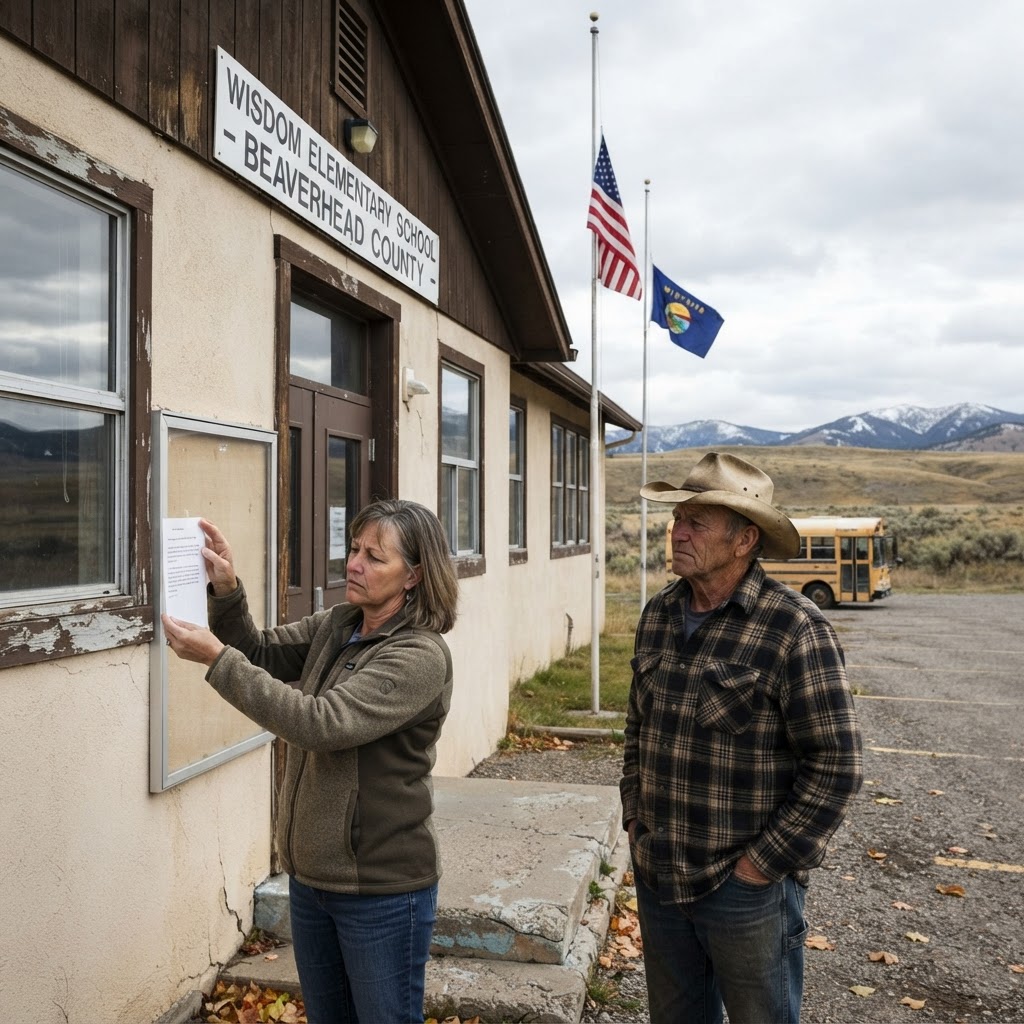
The financial stability of Beaverhead County is facing a critical test as the federal government continues to withhold a significant portion of tax-equivalent payments for public lands. At the heart of the crisis is the Lima school district, which is currently struggling to maintain operations. The shortfall stems from a breakdown in the federal funding formula for the 39,000-acre Red Rocks Lakes Wildlife Refuge, a vast expanse of rugged terrain that, while a natural treasure, provides no traditional property tax revenue to the local government.
Under current federal guidelines, the government is only paying approximately 20% of the total tax value of national wildlife refuges across the country. This funding gap has left Beaverhead County with a deficit of roughly $2 million. The issue is compounded by skyrocketing land values in other high-end Western markets, which have essentially broken the federal compensation formula. Because Congress has not adjusted the budget to match these rising valuations, remote districts like Lima are left to bear the brunt of the shortfall.
For local property owners and real estate investors, this funding gap represents more than just a line item in a budget; it is a direct threat to the local tax base. In a county where a massive percentage of land is federally owned and exempt from local taxation, the private property owners who remain are often forced to shoulder the financial burden of essential services. When federal payments fail to materialize, the pressure on the remaining taxable land increases, creating an environment of fiscal uncertainty that can deter new investment.
Market Stability and the Rural Education Link
The viability of local schools is one of the most significant drivers of residential real estate value in rural Montana. Prospective buyers, particularly young families looking to relocate to the Dillon area or southern Beaverhead County, prioritize school district stability above almost all other factors. If a rural school is forced to close its doors due to budget constraints, the surrounding residential market often sees a sharp decline in demand. Historical data suggests that a reduction in school quality or the threat of closure can lead to a 10% drop in local home values, as the community loses its primary anchor for growth.
This situation also highlights the broader challenges facing the Montana real estate market in counties dominated by federal holdings. While programs like Payment in Lieu of Taxes (PILT) and Secure Rural Schools (SRS) are designed to offset the lack of a private tax base, they are subject to the whims of federal appropriations. For investors, this means that the long-term value of land in these areas is inextricably linked to federal policy and the successful lobbying of Montana’s congressional delegation to ensure these payments are made in full.
As local officials continue to advocate for the $2 million owed to the county, the real estate community is watching closely. The resolution of this funding crisis is essential not only for the students in Lima but for the continued health of the Beaverhead County property market. Ensuring that the federal government meets its obligations is the only way to maintain the delicate balance between preserving Montana’s public lands and supporting the private communities that border them.