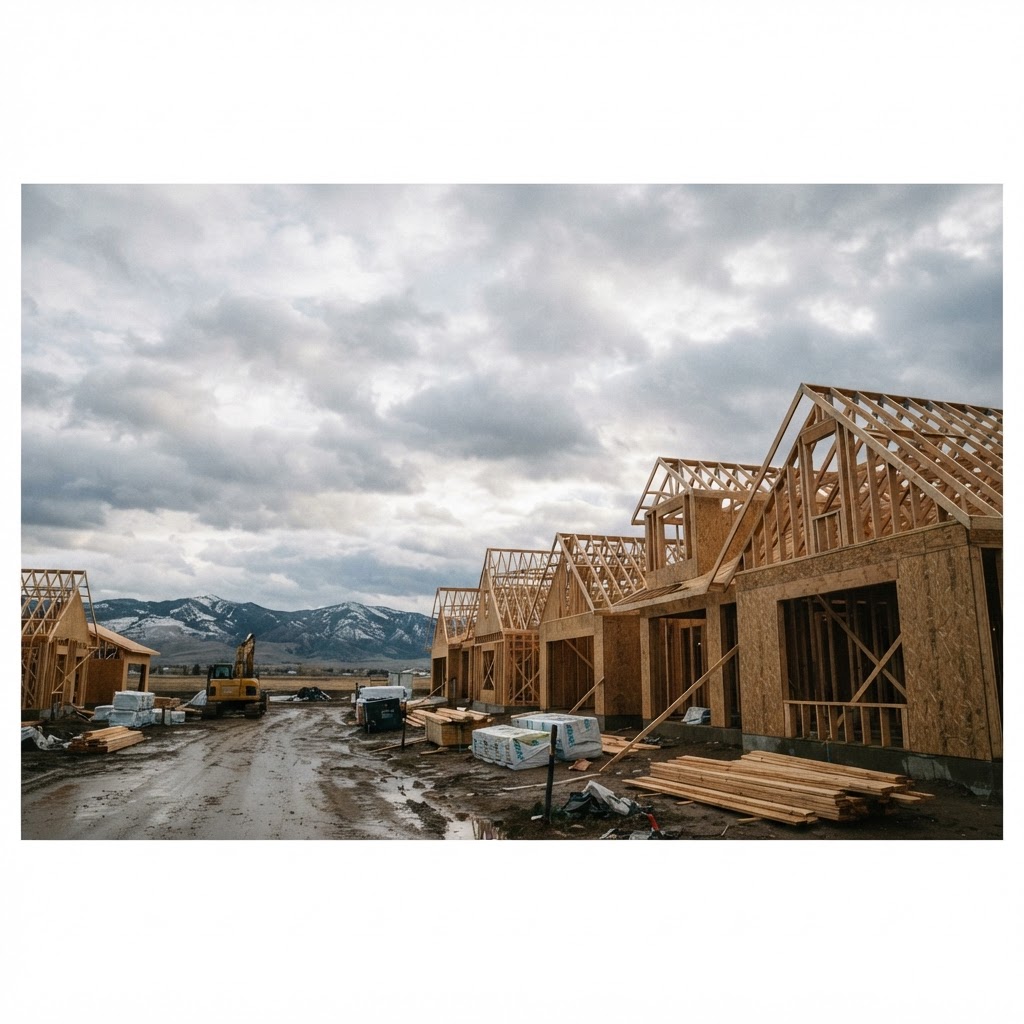
As we move through the final quarter of 2026, the national housing narrative has shifted toward a familiar stalemate: while home prices have shown signs of volatility and occasional cooling, the persistent weight of high interest rates continues to stifle affordability for the average buyer. A recent national analysis underscores this disconnect, revealing that a typical household now faces significant hurdles in securing a median-priced home. However, for those navigating the Montana market, these national benchmarks serve only as a starting point, as our state’s unique economic landscape continues to defy broad generalizations.
Local Realities in a High-Rate Environment
In Montana, the gap between local wages and home prices remains a defining challenge. While some national markets have seen prices blink in response to economic pressures, Montana’s inventory constraints and sustained demand have kept values elevated. In regions like the Gallatin Valley, the cost of ownership has been compounded not just by mortgage rates, but by rising property taxes and increased escrow requirements. This has forced many prospective buyers to look toward secondary markets or adjust their expectations entirely, as the income required to comfortably afford a median-priced home in our state remains significantly higher than the typical household earnings.
Despite these headwinds, the Montana market is far from stagnant. Recent data from Northwest Montana shows that while buyer activity often follows a seasonal fall cooldown, overall transaction volume for the year has remained resilient compared to previous periods. We are seeing a shift in buyer psychology; many who were previously waiting on the sidelines for a significant rate drop have begun to accept the current interest rate environment as the new baseline. This shift has helped return a sense of normalcy to the market, even if that normalcy is defined by higher costs.
For sellers, the current climate demands a more strategic approach. With inventory levels climbing in many counties, the days of effortless, rapid sales are largely behind us. Well-priced properties are still moving, often receiving a high percentage of their list price, but buyers are increasingly discerning. Sellers who fail to align their pricing with current local realities may find their properties lingering on the market longer than they would have in the hyper-competitive years of the recent past.
Ultimately, the 2026 market is a reminder that real estate is hyper-local. While statewide headlines might suggest a cooling trend, a deep dive into specific counties—from the high-demand corridors of Bozeman to the more accessible markets in the eastern part of the state—reveals a complex mosaic of activity. For investors, buyers, and sellers alike, the key to navigating the remainder of the year lies in ignoring the noise of national averages and focusing on the specific inventory, price trends, and economic drivers of their own backyard.