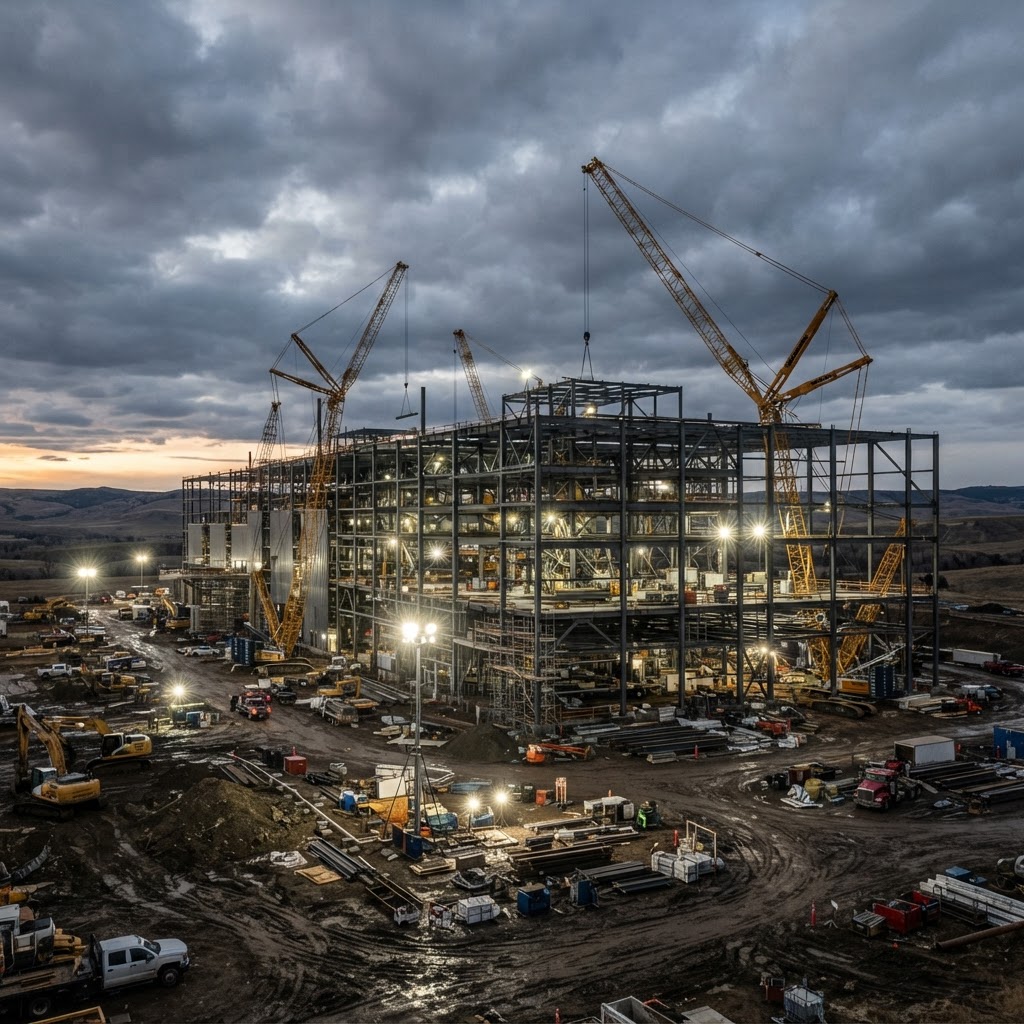
The specialized infrastructure sector is facing a period of intense financial strain as the cost to build data centers surged by 13% year-over-year in 2026, according to a report from the global project management firm Turner & Townsend ([4]). This rate of inflation in North American and European markets is double the global average of 6%, signaling a challenging environment for developers and investors alike ([5], [10]). These rising expenses are largely attributed to a combination of skilled labor shortages, particularly in mechanical, electrical, and plumbing trades, and the increasing complexity of facilities designed to support artificial intelligence workloads ([4], [5]).
Market Pressures and Development Trends
While construction costs are climbing, the appetite for data center development remains historically high. Data from the U.S. Census Bureau indicates that private spending on data center construction reached a seasonally adjusted annual rate of $96.46 billion in September 2026, a 90.3% increase compared to September 2025 ([9]). The Associated General Contractors of America noted that this surge in data center and power project investment is buoying the broader construction industry, even as other private nonresidential sectors experience declines ([3]).
However, the path to project completion is becoming increasingly difficult. According to Cushman & Wakefield, development costs per megawatt have risen 21% since late 2024, driven by long lead times for critical equipment and the scarcity of grid-connected power ([7]). Scot Bommarito, Vice President of Research at RCLCO Fund Advisors, observed that these delays can lead to slower repayment for lenders and deferred value realization for operators, forcing developers to become more selective about their site choices ([2]).
Implications for the Montana Market
For Montana investors and property owners, these national trends highlight a shift in how large-scale commercial projects are evaluated. As primary markets face power constraints and land scarcity, developers are increasingly looking toward secondary and tertiary markets to find viable sites ([7]). This geographic dispersion could bring new opportunities to Montana, but local stakeholders should be aware that "speculative land holders" are likely to face pressure to derisk their properties or reposition them for alternative uses if they cannot meet the stringent requirements of modern data center operators ([2]).
For those involved in Montana real estate, the takeaway is clear: site deliverability is now the primary differentiator. Projects that can demonstrate transparency, environmental sensitivity, and a commitment to local infrastructure upgrades are more likely to secure approval in an increasingly competitive capital environment ([2]). While the high cost of construction may deter some speculative activity, the ongoing demand for AI-ready infrastructure suggests that Montana’s land assets could play a larger role in the national digital pipeline if they can offer the necessary power and connectivity certainty that developers currently prioritize ([7]).
Sources
http://www.soldmontana.com/default.asp.f-news https://www.cnbc.com/2026/11/20/data-center-construction-costs-soar-13-percent-in-2026.html https://urbanland.uli.org/capital-markets-and-finance/data-center-expansion-under-pressure https://www.agc.org/news/2026/11/02/data-centers-power-projects-buoy-construction-spending-september-other-sectors-stall-or-slide-face https://www.turnerandtownsend.com/insights/data-centre-construction-cost-index-2026-27 https://reports.turnerandtownsend.com/data-centre-construction-cost-index-2026/cost-trends https://www.cushmanwakefield.com/en/united-states/insights/data-center-development-cost-guide https://tomkilli.com/gigawatt-gap/design-and-construction/construction-and-operations/the-census-bureaus-preliminary-figures-show-private-data-center-construction-rose-in-september