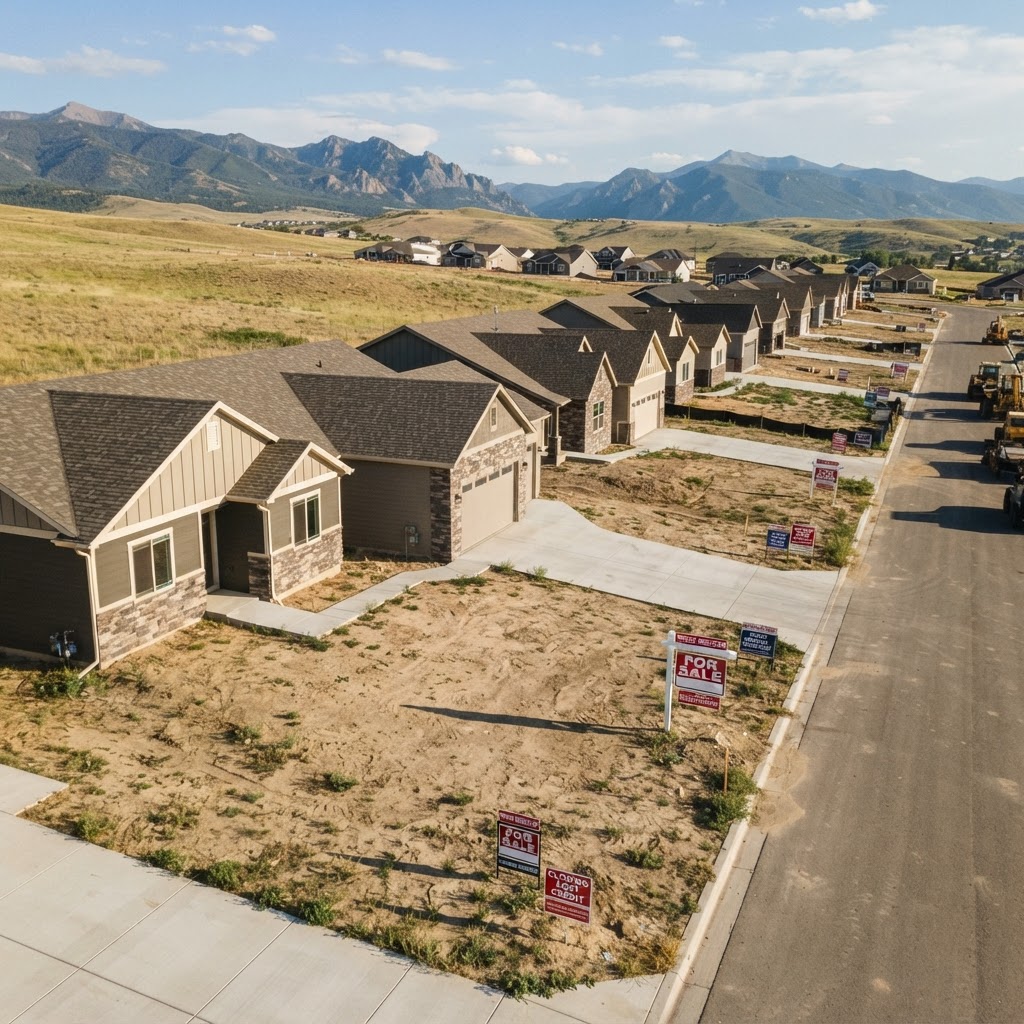
As mortgage rates remain stubbornly elevated, homebuilders across the country are increasingly turning to aggressive financial concessions to keep inventory moving. According to the latest National Association of Home Builders (NAHB)/Wells Fargo Housing Market Index (NAHB), builder confidence dropped four points in November to a reading of 25, the lowest level recorded since April 2012. This decline reflects a broader struggle as builders face a combination of high borrowing costs, persistent inflation, and a shrinking pool of qualified buyers.
A Market Driven by Concessions
To combat the cooling demand, builders are relying on price reductions and sales incentives at rates not seen since the onset of the pandemic. The NAHB survey found that 46% of builders reduced their asking prices in November, marking a post-Covid high. For those who did lower prices, the average discount remained steady at 6% for the eighth consecutive month. Furthermore, 68% of builders reported offering sales incentives—such as mortgage rate buydowns—to attract buyers, continuing a 20-month streak where at least 60% of builders utilized such tactics to close deals, as reported by RateZip.
These strategies are essential as national borrowing costs continue to pressure the housing sector. Freddie Mac reported that the average 30-year fixed mortgage rate reached 7.28% for the week ending November 19, 2026, up from 7.11% the previous week. While the 10-year Treasury yield—a key benchmark for mortgage pricing—saw a decline of 23 basis points over the week ending November 20, the gap between market benchmarks and individual lender offers remains wide, with rates varying significantly based on credit and loan eligibility, according to RateZip.
Montana Market Context
For Montana buyers and investors, these national trends highlight a critical shift in the new-construction landscape. While Montana’s housing market often operates with its own unique supply constraints, the national reliance on builder incentives is a trend local buyers should watch closely. If you are currently shopping for a new build in markets like Bozeman or Missoula, the data suggests that builders may have more flexibility on price or financing than they did earlier this year. However, with builders facing their own margin pressures from rising labor and material costs, these concessions are likely a temporary bridge rather than a long-term price reset. Investors should note that while new homes are currently being positioned as more affordable than existing inventory, the high-rate environment continues to limit the overall velocity of the market.