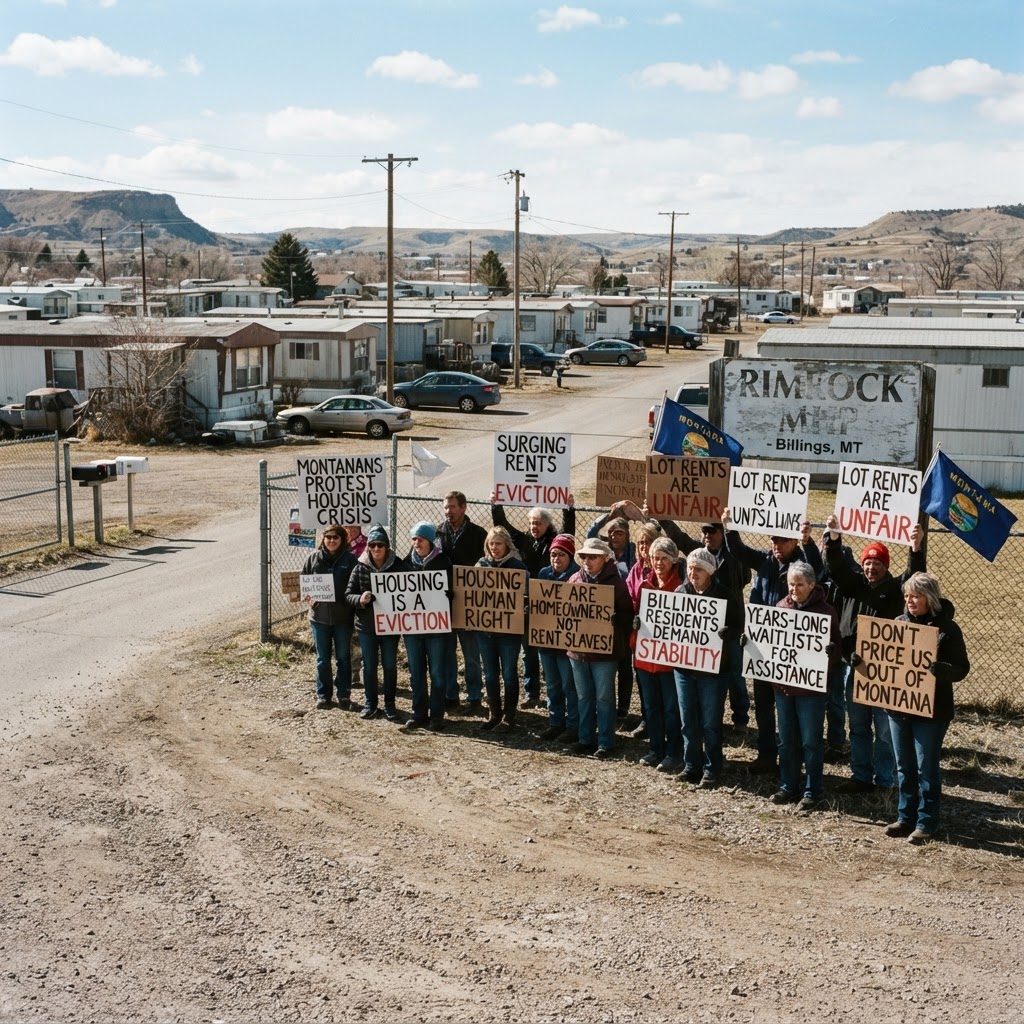
Tensions over housing affordability reached a boiling point in Billings this November as residents gathered outside the courthouse to protest surging rental costs and a severe lack of available housing. The demonstration, held on November 17, highlighted a growing crisis for Montanans who find themselves squeezed between stagnant incomes and rapidly escalating living expenses. According to reporting by Q2 News ([1]), protesters called for immediate action from city officials, including the implementation of new pathways to affordable housing and the expansion of public-private partnerships to address the inventory shortage.
For many, the crisis is defined by the precarious nature of manufactured-home living. Residents at the Golden Meadows community in Billings, who own their homes but lease the land beneath them, have reported staggering increases in lot rent. Penny Brown, a resident of the park, told Q2 News ([1]) that her monthly costs for the land have jumped from $283 in 2020 to $800 today, a figure that excludes additional utility and service fees. This financial strain is echoed by long-term residents like Bob Rausch, who noted to KULR8 ([10]) that his lot rent has climbed from $275 to $750 over the last four years. As noted by The Cool Down ([8]), these homeowners face a unique trap: they cannot easily relocate their structures, leaving them with few options other than to absorb the costs or risk losing their homes entirely.
This localized struggle is part of a broader, state-wide trend of housing instability. Data from the Montana League of Cities and Towns ([6]) indicates that nearly 61% of the state’s lowest-income renters must spend more than half of their earnings on housing and utilities. The pressure is compounded by a population increase of 52,000 people since 2020, a surge that has pushed the state’s total population to approximately 1.14 million ([6]). For those seeking assistance, the wait is often measured in years. HomeFront, a local housing organization, reported that as of July 2026, nearly 6,000 people remained on their waiting lists for affordable units ([5]).
In response to these pressures, tenants across Montana are increasingly turning to collective bargaining. In Missoula, residents at Travois Village successfully formed a supermajority union to negotiate with their out-of-state landlord, eventually securing a 3% cap on annual rent increases ([2], [3]). Organizers like those from the Missoula Tenants Union have framed these efforts as a necessary defense against corporate ownership models that prioritize rapid rent hikes ([2]). While these victories offer a blueprint for tenant advocacy, the scale of the crisis in cities like Billings suggests that the path to stability remains steep for many.
For investors and market participants, these developments signal a shift in the regulatory and social landscape of Montana real estate. The rise of tenant unions and the increased scrutiny on lot-rent practices suggest that the era of unchecked rent growth in manufactured-home communities may face mounting legislative and community resistance. Buyers and sellers should be aware that housing affordability is now a central pillar of local political discourse, likely influencing future city planning agendas and potential state-level policy changes regarding tenant protections.