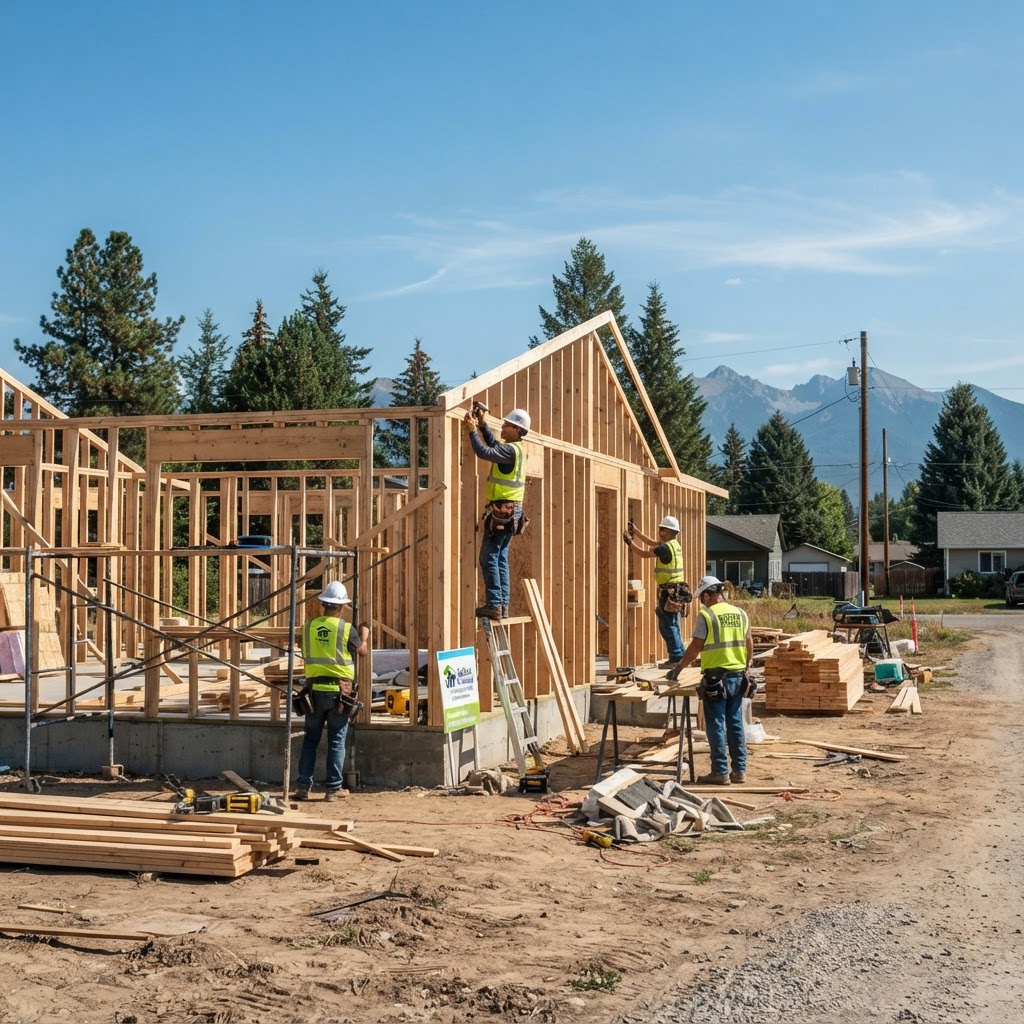
A new residential development on Railroad Street in Columbia Falls is nearing completion, marking a significant milestone for six local families. The project, spearheaded by Habitat for Humanity of Flathead Valley, is expected to close by January 31, 2027, according to Executive Director MaryBeth Morand ([1]). The neighborhood will eventually house 18 children across the six households, providing a stable alternative to the rental market for residents like local massage therapist Lahnie Lamb, who previously struggled with housing instability ([1]).
Community-Driven Construction
The project’s rapid progress was bolstered by a significant contribution from Western Building Center (WBC). The company, which operates a pre-fabrication plant in Columbia Falls, donated the framing and trusses for the homes and completed the structural assembly in just over a day ([1]). This partnership highlights the collaborative effort required to address the region's housing needs, as the land itself was donated by the City of Columbia Falls to the Northwest Montana Community Land Trust to ensure the site remains dedicated to affordable housing ([1], [9]).
To maintain long-term affordability, the development utilizes a specific model: homeowners must contribute “sweat equity” by participating in the construction process ([1], [4]). Furthermore, the homes are subject to deed restrictions that cap equity growth and prohibit short-term rentals, preventing the properties from being flipped or converted into investment vehicles ([1], [5]). Residents also benefit from reduced-interest mortgages, a strategy that Habitat for Humanity uses to keep monthly payments manageable for working-class families ([1], [4]).
Market Context for Montana Buyers
For those navigating the Montana real estate market, the Railroad Street project serves as a case study in how public-private partnerships can mitigate the impact of high entry costs. While median home prices in nearby areas like Whitefish have reached approximately $1 million ([3]), projects like this provide a vital pathway for residents to achieve homeownership. Investors and buyers should note that while these specific units are restricted to maintain affordability, the broader trend of land trusts and deed-restricted housing is becoming a more common tool for municipalities attempting to retain a local workforce in high-demand areas ([3], [9]). As Habitat for Humanity continues to seek new land to “feed the beast of this construction pipeline,” the success of this subdivision may encourage similar density-focused developments across the Flathead Valley ([3]).
Sources
https://hagadonenewsnetwork.com/news/2026/nov/25/wbc-helps-build-railroad-street-habitat-for-humanity-house/ https://hungryhorsenews.com/news/2026/nov/25/wbc-helps-build-railroad-street-habitat-for-humanity-house/ https://flatheadbeacon.com/2025/12/29/habitat-for-humanity-accepting-applications-for-single-family-homes-in-columbia-falls/ https://hungryhorsenews.com/news/2026/aug/05/families-move-into-new-habitat-for-humanity-townhomes-applications-being-taken-for-others https://hungryhorsenews.com/news/2025/may/14/commission-oks-habitat-for-humanity-project-on-railroad-street https://hungryhorsenews.com/news/2025/feb/12/habitat-for-humanity-trims-columbia-falls-subdivision-by-a-house https://hungryhorsenews.com/news/2025/may/28/city-oks-habitat-for-humanity-homes-at-park https://whitefishpilot.com/news/2025/dec/22/habitat-for-humanity-opens-applications-for-six-new-homes-in-columbia-falls https://dailyinterlake.com/news/2026/feb/01/city-sets-direction-for-growth-avoids-moratorium-l https://dailyinterlake.com/news/2025/feb/15/habitat-for-humanity-trims-proposed-subdivision-in-columbia-falls