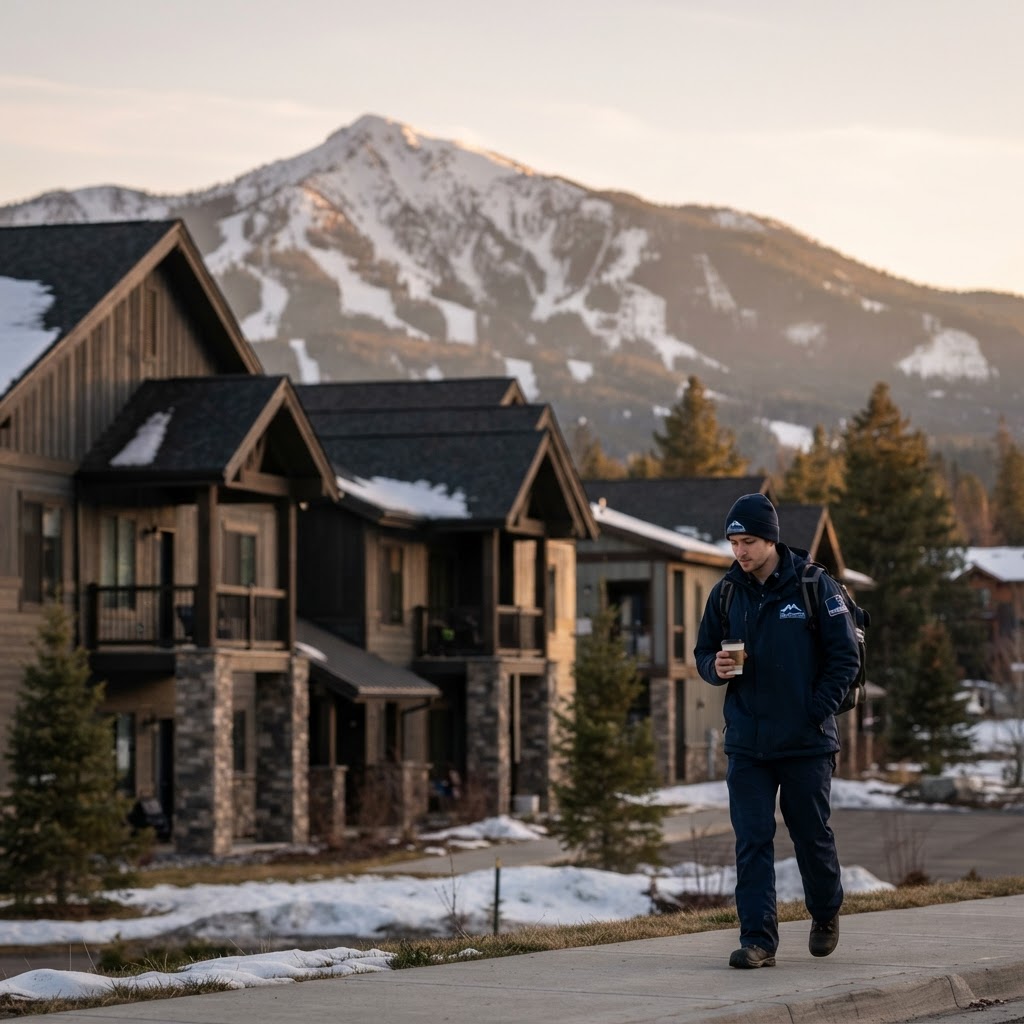
Housing Whitefish has officially launched the Big Mountain Workforce Rental Assistance Program, a targeted initiative designed to stabilize the workforce within the Big Mountain Resort Area District. By leveraging a 3% tax on goods and services collected within the district, the program provides direct monthly rental subsidies to eligible employees. According to the Whitefish Pilot ([https://whitefishpilot.com/news/2026/nov/25/big-mountain-workforce-housing-assistance-program-launches/]), the program offers up to $400 in monthly assistance, with payments issued directly to landlords or property managers. Unlike the organization’s existing Whitefish WRAP, which is tied to residency in the 59937 zip code, this new pilot program focuses exclusively on employment location, allowing workers to qualify regardless of where they reside.
The program is supported by an initial $75,000 grant from the Big Mountain Resort Area District, supplemented by a $20,000 contribution from Whitefish Mountain Resort via the Whitefish Community Foundation ([https://whitefishpilot.com/news/2026/nov/25/big-mountain-workforce-housing-assistance-program-launches/]). Ron Benton, chair of the Big Mountain Resort Area District board, noted that workforce housing was a primary motivation for residents who voted to implement the resort tax in June 2025 ([https://whitefishpilot.com/news/2026/nov/25/big-mountain-workforce-housing-assistance-program-launches/]). The district, which collected approximately $1.5 million in its first year of tax implementation ([https://whitefishpilot.com/news/2026/jul/29/inaugural-big-mountain-resort-tax-funds-distributed/]), views this subsidy as a rapid, impactful solution to the housing instability that often drives turnover in the hospitality sector.
Daniel Sidder, executive director of Housing Whitefish, emphasized that the program is essential for maintaining the community's service quality. As reported by the Flathead Beacon ([https://flatheadbeacon.com/2026/11/11/at-housing-symposium-maps-out-challenges-solutions-and-resources/]), the original Whitefish WRAP has served nearly 155 households since 2024, representing over 300 individuals and 100 children. The new Big Mountain iteration requires applicants to work full-time within the district and meet income requirements, with employment verified both at the time of application and following the winter season to ensure seasonal workers remain covered ([https://whitefishpilot.com/news/2026/nov/25/big-mountain-workforce-housing-assistance-program-launches/]).
For investors and market observers, this program highlights the ongoing tension between Whitefish’s high cost of living and its labor needs. With median home prices in Whitefish exceeding $1 million ([https://flatheadbeacon.com/2026/11/11/at-housing-symposium-maps-out-challenges-solutions-and-resources/]) and a projected need for 930 additional housing units by 2035 ([https://nbcmontana.com/news/local/symposium-addresses-housing-challenges-in-whitefish]), rental assistance serves as a critical stopgap. While developers continue to bring new inventory to the market—such as the Alpine 93/40 project which includes dedicated workforce units ([https://whitefishpilot.com/news/2026/sep/30/new-workforce-rental-units-coming-to-alpine-9340])—the reliance on subsidy programs underscores the difficulty of achieving long-term affordability in one of Montana’s most expensive real estate markets.
Sources
https://whitefishpilot.com/news/2026/nov/25/big-mountain-workforce-housing-assistance-program-launches/ https://flatheadbeacon.com/2026/11/11/at-housing-symposium-maps-out-challenges-solutions-and-resources/ https://nbcmontana.com/news/local/symposium-addresses-housing-challenges-in-whitefish https://whitefishpilot.com/news/2026/jul/29/inaugural-big-mountain-resort-tax-funds-distributed/ https://whitefishpilot.com/news/2026/sep/30/new-workforce-rental-units-coming-to-alpine-9340