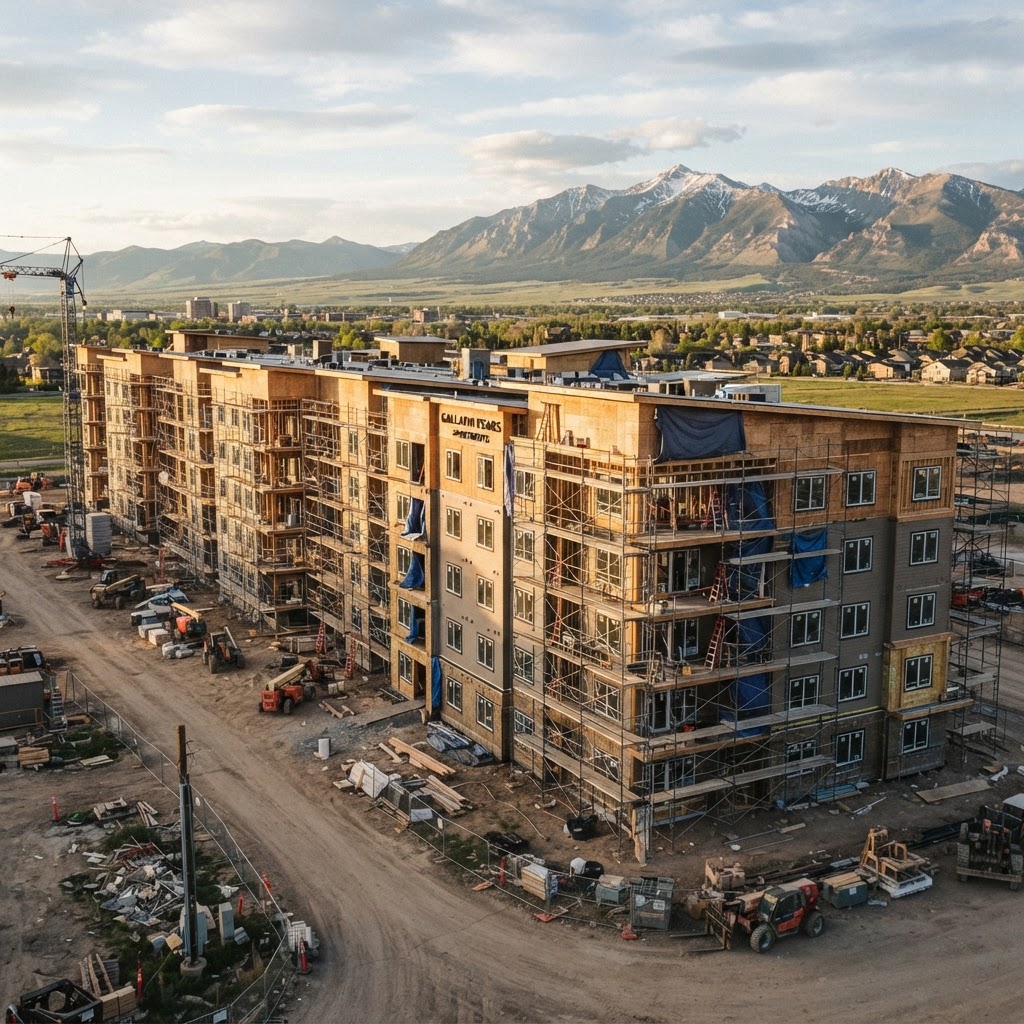
The Bozeman multifamily landscape is currently navigating a period of significant recalibration as a historic wave of new construction meets shifting market demand. According to a Comprehensive Housing Market Analysis published by the U.S. Department of Housing and Urban Development (HUD) ([1]), the city saw its apartment vacancy rate climb to 21.2% in the second quarter of 2025. This surge in available inventory, which rose from 15.6% the previous year, has exerted downward pressure on pricing, resulting in a 7% year-over-year decline in average rents to $2,171 ([1], [7]). This shift represents the first rental price contraction in the city since 2010, signaling a departure from the rapid growth that defined the post-2020 era ([1], [7]).
A Market in Transition
The current supply-side dynamics are largely attributed to a concentrated period of development. Data from the City of Bozeman and Economic & Planning Systems (EPS) indicates that approximately 1,900 units were added to the market between 2024 and mid-2025 ([3], [6]). This influx created a distinct bifurcation in the market: while older, established properties have maintained lower vacancy rates, newly delivered projects have faced higher initial vacancy levels as they work through lease-up periods ([3], [4]). For instance, 2025 reporting showed a 44.2% vacancy rate for units built in the 2024–2025 cohort, compared to just 9.2% for properties constructed prior to 2024 ([3], [4]).
Despite these elevated vacancy figures, recent indicators suggest the market is beginning to find its footing. By the second quarter of 2026, Cushman & Wakefield reported that Bozeman’s stabilized vacancy rate had declined to 5.2%, with net absorption outperforming new deliveries during the first half of the year ([2]). Kara Hogan of Sterling CRE noted in the Montana Free Press that the vacancy rate has been trending downward by approximately one percentage point per quarter since late 2025, as the market effectively digests the recent surge in supply ([6]).
Implications for Investors and Renters
For investors, the current environment requires a more nuanced approach to asset management. While the headline vacancy numbers may appear daunting, they often mask the performance of stabilized, high-quality assets. As noted by Ironhorse Management, owners of established units are encouraged to focus on disciplined leasing strategies during turnover rather than viewing the broader market softening as a systemic failure ([4]). Furthermore, while rent growth has moderated, Bozeman remains a high-cost environment compared to the broader Montana average, where effective rents were reported at $1,752 in mid-2026 compared to Bozeman’s $2,207 ([2]).
Looking ahead, the pace of new construction is expected to moderate as developers respond to the current supply-demand balance. While the development pipeline remains active, with hundreds of units still in planning or under construction, the focus has shifted toward absorption ([2], [5]). For prospective buyers and developers, the primary challenge remains the high cost of land and labor, which continues to make the delivery of new, non-subsidized housing a complex financial undertaking ([10]). As the market continues to stabilize, the long-term outlook remains tied to the city’s ability to balance its robust employment growth with a more sustainable pace of inventory expansion ([1], [8]).