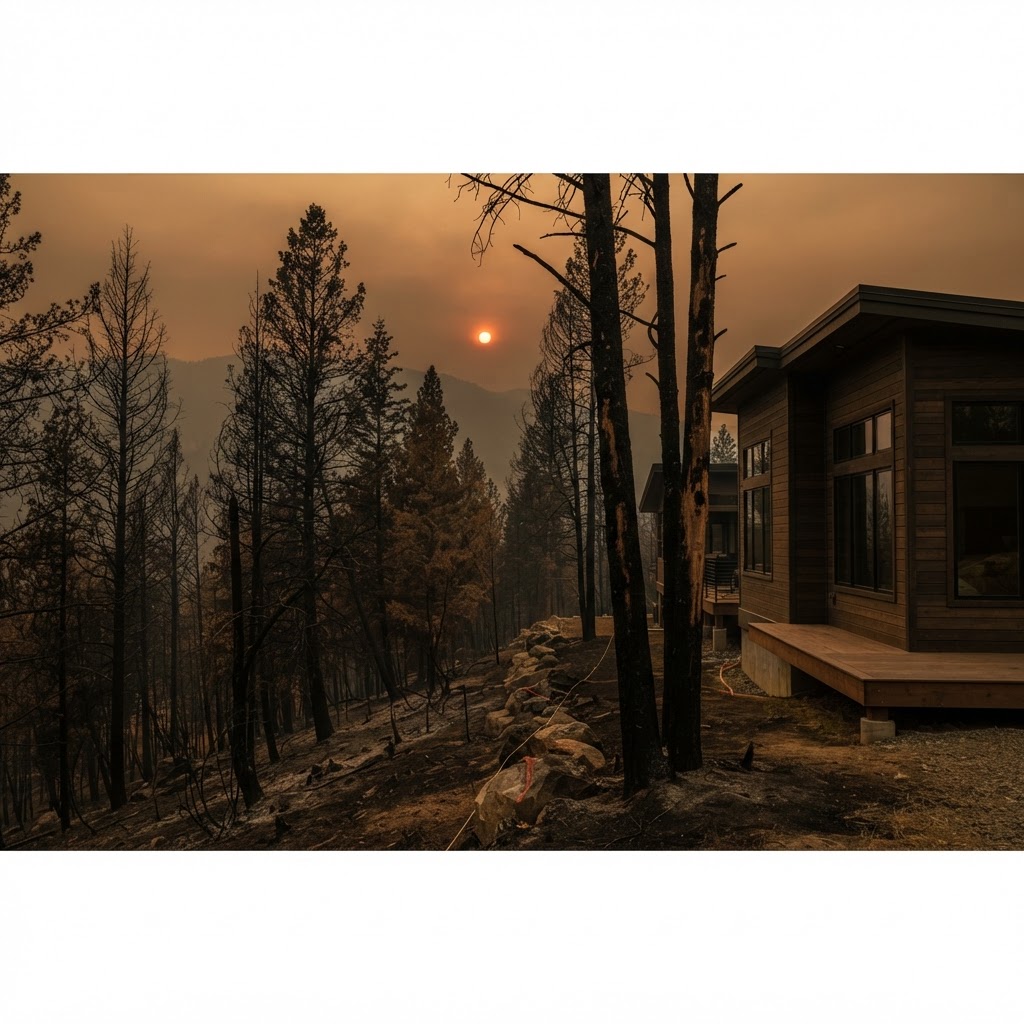
For many Montanans, the dream of homeownership is increasingly colliding with the harsh reality of a volatile insurance market. As wildfire seasons grow longer and more destructive, the state’s property insurance landscape is undergoing a fundamental shift, leaving homeowners to navigate rising premiums and the looming threat of policy non-renewals. According to Montana State Auditor and Commissioner of Securities and Insurance James Brown, the state is seeing a surge in complaints from residents who are either facing significant price hikes or finding their coverage dropped entirely as insurers reassess wildfire risk, as reported by Inside Climate News ([https://insideclimatenews.org/news/24112026/montana-wildfire-insurance-costs/]).
The Growing Cost of Risk
The financial strain is widespread, with data from the American Property Casualty Insurance Association indicating that homeowners insurance premiums in Montana have climbed roughly 40 percent since 2019 ([https://insideclimatenews.org/news/24112026/montana-wildfire-insurance-costs/]). A report from the Consumer Federation of America found that average premiums in the state rose 10 percent between 2021 and 2024, with rural homeowners hit particularly hard by an 11 percent increase compared to 5 percent in urban and suburban areas ([https://insideclimatenews.org/news/24112026/montana-wildfire-insurance-costs/]). These increases are driven by a confluence of factors, including inflation, rising construction costs, and the escalating frequency of climate-related disasters, according to the Insurance Information Institute ([https://insideclimatenews.org/news/24112026/montana-wildfire-insurance-costs/]).
For those in the real estate market, the implications are profound. The Northwest Montana Association of REALTORS® recently noted that insurance has become a critical hurdle for transactions; while existing homeowners may hold onto policies, new buyers often find they cannot secure the same coverage, potentially derailing sales and skewing debt-to-income ratios for prospective borrowers ([https://nmar.com/2026/11/02/wildfire-insurance-impacts-more-than-just-your-premium]). With nearly two-thirds of Montana homes located within the Wildland-Urban Interface (WUI), where residential development meets fire-prone landscapes, the vulnerability of the state’s housing stock remains a primary concern for both insurers and policymakers ([https://insideclimatenews.org/news/24112026/montana-wildfire-insurance-costs/]).
Legislative and Market Outlook
State officials are actively seeking solutions to stabilize the market. During the 2025 legislative session, lawmakers passed House Bill 136, which allows insurers to offer premium reductions to homeowners who implement vegetation management and other defensible space measures ([https://insideclimatenews.org/news/24112026/montana-wildfire-insurance-costs/]). Additionally, House Bill 533 now requires insurers to disclose wildfire risk scores to policyholders upon request ([https://insideclimatenews.org/news/24112026/montana-wildfire-insurance-costs/]). While these measures aim to encourage mitigation, the path forward remains complex. Research from Headwaters Economics and the Columbia Climate School suggests that community-level hazard mitigation and regulatory reforms are essential to maintaining a viable insurance market in the face of growing wildfire threats ([https://insideclimatenews.org/news/24112026/montana-wildfire-insurance-costs/]).
For Montana buyers and investors, the takeaway is clear: due diligence must now extend beyond the physical inspection of a property to include a thorough review of insurability. As the state continues to grapple with these challenges, prospective homeowners should verify the wildfire risk profile of any potential purchase and consult with insurance providers early in the buying process to avoid unexpected financial roadblocks.
Sources
https://insideclimatenews.org/news/24112026/montana-wildfire-insurance-costs/ https://nmar.com/2026/11/02/wildfire-insurance-impacts-more-than-just-your-premium